| |

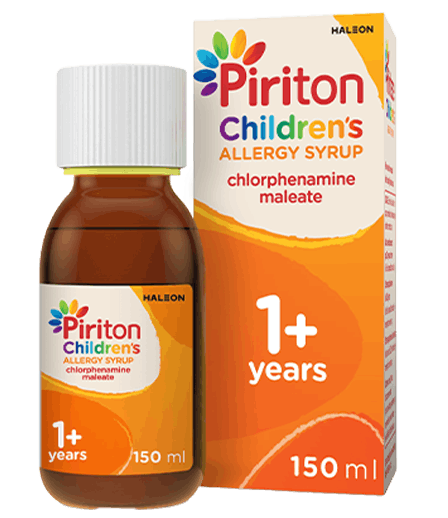
Piriton Syrup is colourless syrup. Each 5 ml of syrup contains
2 mg of chlorphenamine maleate as the active ingredient.
The syrup also contains sucrose, glycerol, ethanol, tingle
flavour, peppermint oil, water and, as preservative, a
mixture of methyl, ethyl and propyl hydroxybenzoates (E218,
E214 and E216). Each bottle contains 150 ml of syrup.
Back to top >

The syrup contains the active ingredient chlorphenamine
maleate. Chlorphenamine belongs to a group of drugs called
antihistamines which help relieve the symptoms of some allergies
and itchy skin rashes.
The syrup is used to treat the allergic symptoms (runny
and itchy nose, with or without stuffiness) caused by hayfever
and other allergies e.g. pet and house dust mite allergies.
It relieves itchiness, redness, swelling, tenderness and
irritation.
You can take the syrup for things like:
| • |
hayfever and other allergies e.g. pet, house dust mite
and mould spore allergies |
| • |
nettle rash and hives |
| • |
skin allergies and dermatitis |
| • |
prickly heat and heat rash |
| • |
reactions to food, food additives or medicines |
| • |
insect bites and stings |
| • |
the itchy rash of chickenpox |
Many children find syrup formulations
easier to take than tablets.
Back to top >
| Do not take the syrup
if you: |
| • |
Are allergic to antihistamines or to any of the
ingredients listed above. |
| • |
Have taken drugs for depression called monoamine oxidase
inhibitors (MAOI)
within the last 14 days. |
| Please see your
doctor before you take the syrup if you: |
| • |
Have epilepsy, glaucoma, an enlarged prostate,
an overactive thyroid, very high blood pressure,
or heart, liver or chest disease.
|
| • |
Are taking medicines to treat anxiety or to help
you sleep. |
| • |
Are taking any medicine containing phenytoin for
epilepsy. |
| Taking the medicine
with food and drink: |
| • |
As with other antihistamines the effects of alcohol
may be increased. |
| Pregnancy and breast
feeding: |
| • |
Consult your doctor before taking the syrup if
you are pregnant or breast feeding. |
| Driving and using
machines: |
| • |
If the syrup makes you feel drowsy, do not drive
or operate machinery. |
| Important information
about some of the ingredients of the syrup: |
| • |
The syrup contains sucrose. Diabetics should take
care when using the syrup.
Long term use of the syrup
could increase the risk of tooth decay, so clean
your teeth regularly.
If you have been told by your
doctor that you have an intolerance to some sugars,
contact your doctor before taking the syrup.
|
| • |
The product contains 6.3% v/v ethanol (alcohol),
i.e. up to 515 mg per adult dose,
equivalent to 13 ml beer, 6 ml wine per dose. Harmful
for those suffering from alcoholism. To be taken
into account in pregnant and breast feeding women,
children and high-risk groups such as patients with
liver disease or epilepsy.
|
| • |
Methyl, ethyl and propyl hydroxybenzoates (E218,
E214 and E216) may cause allergic reactions (possibly
delayed). |
How to take the syrup
Use the two-headed spoon provided with the syrup.
1-2 years:
One small 2.5 ml
spoonful twice daily. Maximum Daily Dose: 2 small 2.5 ml
spoonfuls (5 ml)
2-6
years
One small 2.5 ml spoonful every 4-6 hours. Maximum
Daily Dose: 6 small 2.5 ml spoonfuls (15 ml)
6-12 years:
One large 5 ml spoonful
every 4-6 hours. Maximum Daily Dose: 6 large 5 ml spoonfuls
(30 ml)
Adults and
children over 12 years:
Two large 5 ml spoonfuls
(10 ml) every 4-6 hours. Maximum Daily Dose: 12 large
5 ml spoonfuls (60 ml)
Children under 12 months: Not recommended.
If symptoms persist consult your doctor.
If you take more syrup than you should:
If
you (or someone else) swallow more than the recommended
dose, or if you think a child has accidentally swallowed
more than the recommended dose, contact your nearest hospital
casualty department or your doctor immediately. Do not
drive if it is you that has taken too much. Take the syrup
with you so that the doctor can see what has been taken.
If you forget to take the syrup:
If you
forget to take the syrup, take a dose as soon as you remember,
unless it is nearly time to take the next one. Never take
two doses together. Take the remaining doses at the correct
time.
Back to top >

Most people taking the syrup find it causes them no problems.
Children and the elderly are more prone to side effects.
The most common side effect is drowsiness. This drowsiness
can be helpful if symptoms are particularly troublesome
at night.
Occasionally some people may have difficulty concentrating;
blurred vision; loss of appetite, indigestion or upset stomach,
feeling or being sick; diarrhoea, tummy pain; liver inflammation
(which may make you feel weak, sick and turn yellow); difficulty
in passing water; headaches; dry mouth; dizziness, palpitations
(feeling your heart beat), fast or irregular heart beat,
low blood pressure (you may feel faint), chest tightness;
thickening of phlegm; blood disorders (anaemia); allergic
reactions including itchy rash, skin peeling, and sensitivity
to the sun; twitching, muscular weakness and inco-ordination;
ringing in the ears; depression (low mood); irritability
or nightmares; children may become excited and the elderly
may become very confused. If you are concerned about these
effects, or if the syrup affects you in any other way, stop
taking it and talk to your doctor or pharmacist.
Back to top >

Is Piriton Syrup only for use
by small children?
Piriton Syrup is intended for use in children over the age of one year. However, older children and even adults who prefer liquid medicines to tablets can use Piriton Syrup.
Back to top >
Print a
PDF version of this page >
If you would like to find out more about any of these products please email our customer care team who will be happy to answer any questions.
Click here to email us >
|